
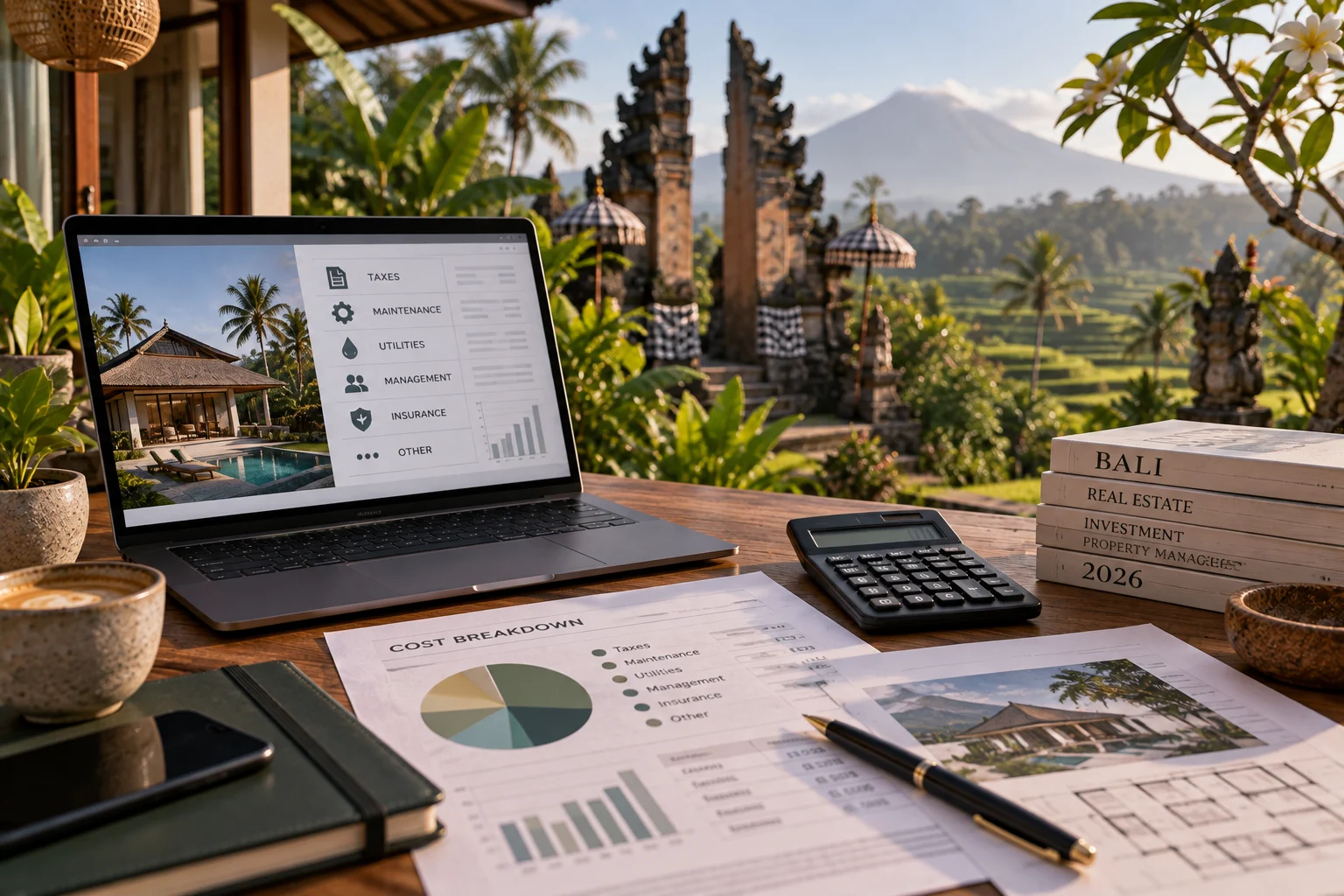
Bali real estate ads often promise 15%, 20%, and even 25% per annum. It sounds great, but this is usually the gross income—that is, all the money tourists paid. We're interested in something else: how much money will actually be deposited into your account. This is net profit. To determine the real net ROI (Return on Investment) in Bali, you need to subtract taxes, utilities, and repairs from the advertised figures.
Sounds scary? It's not. Let's break down all the expenses in simple terms.
Taxes: Who pays them, how much, and why they're not scary
Renting out your property illegally in 2026 is a bad idea. Bali's tax system is strict. The main charge you'll face is the rental tax (in tourist areas, it's called PB1—Pajak Barang dan Jasa Tertentu). It amounts to up to 10%.
It's a shame to give away a tenth of your income, but the secret is that you don't pay it out of pocket. This tax is built into the price of your stay. Basically, the tourist pays it, and the hotel simply collects the money and passes it on to the government. Problems and unexpected property taxes in Bali only arise for those who try to rent out their villa themselves and forget to add these 10% to the price on the booking website.
Maintenance: Why You Shouldn't Skimp on Cleaning in Bali
Bali is a tropical paradise. Heat, 80% humidity, and ocean salt in the air can quickly ruin a home. High-quality apartment maintenance in Bali isn't a luxury—it's a money-saver.
Monthly expenses (Service Charge) typically include:
- Cleaning and laundry. Bed linen should be perfect every day.
- Pool maintenance. If you don't clean it twice a week, the water will bloom.
- Security and internet. 24/7 surveillance and stable Wi-Fi.
- Minor repairs. Fix an outlet, clean an air conditioner, paint a wall.
The management company charges a fixed fee for this. These are understandable expenses that keep your property looking new.
The Repair Fund (Depreciation): A Secret They Keep Quiet
Furniture gets old. In three years, the mattress will sag, the sofa will get dirty, and the air conditioner will start making noise. Ratings will drop, and guests will start complaining. If you rent out the house yourself, you'll have to shell out a large sum for repairs. That's never a good idea.
Good hotel operators do things differently. They discreetly set aside 2–3% of their revenue each month into a special fund. You won't notice these expenses. But when it's time to update the furniture or freshen up the renovations in five years, the money for it will already be sitting in the account. Your property won't lose value and will continue to command high rents.
Should I rent it out myself or through a hotel?

Many people think: why pay a hotel commission? I'll buy a villa, hire a local cleaner, and keep all the money for myself.
In practice, property maintenance costs in Bali, when rented out independently, can eat up to 40% of your income. Pump breaks? You pay a repairman through the nose for an emergency. Cleaning lady gets sick? A guest leaves a bad review. Plus, sites like Airbnb take their commission—around 15%.
A chain hotel operates on a wholesale principle. They buy shampoos, linens, and pool chemicals cheaply and for hundreds of rooms at a time. Plumbers and electricians are already on staff. The hotel takes a commission, but thanks to wholesale prices and a constant flow of tourists, your bottom line is more stable and higher. You don't have to fix toilets or deal with dissatisfied guests—you just get paid.
Investing is a business. Expenses are inevitable, and that's normal. The key is to calculate them in advance. Don't fall for the fairytale returns that "forgot" to deduct taxes and cleaning costs.
If you want to see the real numbers, please contact ANTA Group. We are building complexes in Bali together with global hotel chains. Radisson Individuals Canggu и Ramada Encore Pandawa.
Write to us, and we'll send you a fair financial model: how much the complex will earn, how much it will cost in maintenance, and how much you'll receive net each month.