
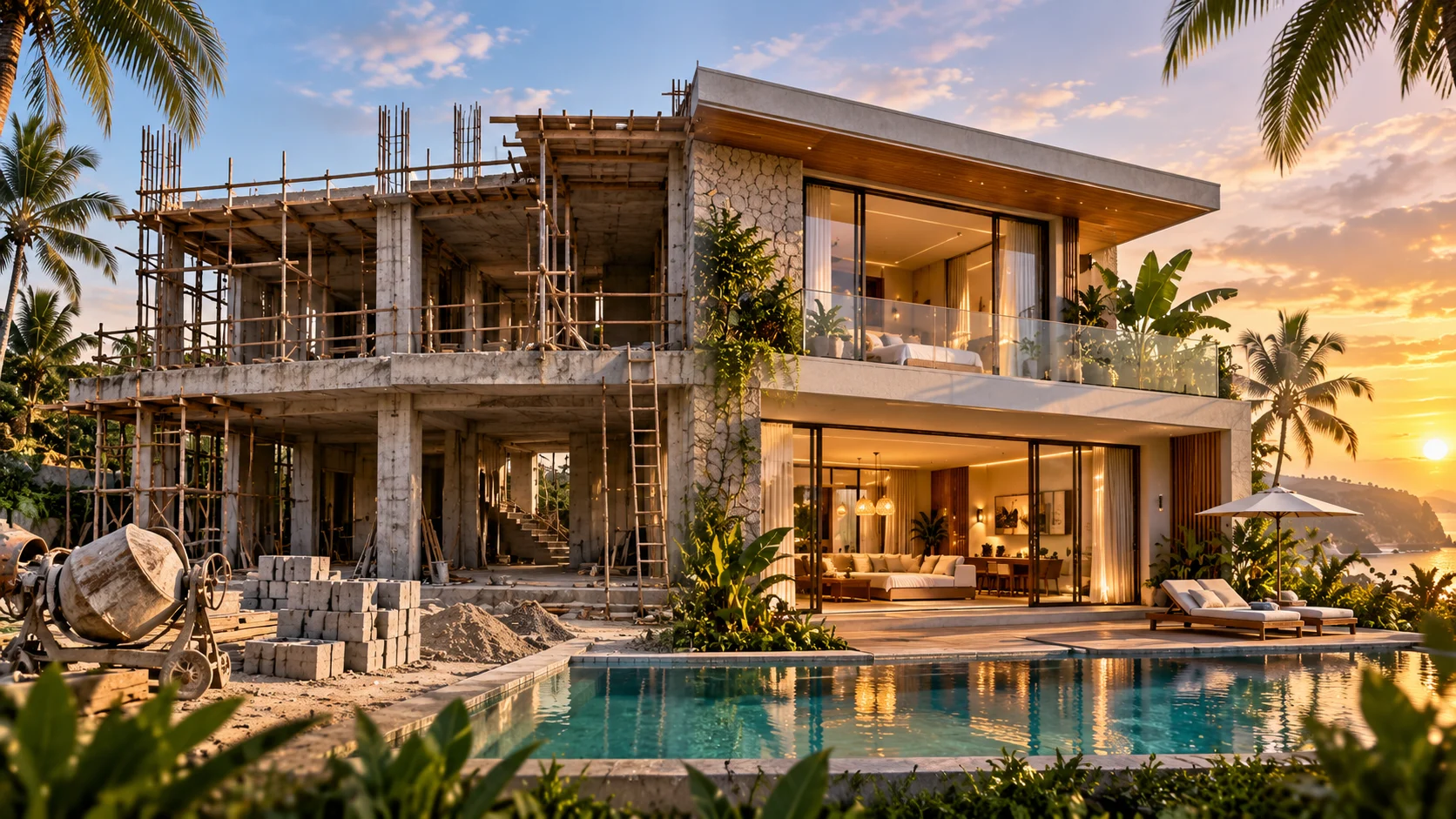
Bali has long ceased to be just a paradise island for surfers and remote workers. Today, it's one of the hottest real estate markets in the world, attracting capital from all over the world. People flock here for high returns, which in Europe seem like a fantasy (on the island, you can still earn 12–15% per annum in dollars). But when it comes to actually buying, every investor faces the same choice. What's better: invest in a project at the groundbreaking stage and make a killing on the resale, or buy a completed property so that the money starts flowing into your account next month?
It's a classic battle of two strategies: aggressive capital gains versus fast passive income. Let's break down the pros and cons of both approaches, without fluff or fancy talk, so you can clearly understand which one best suits your financial goals.
Invest in a foundation: real estate at the construction stage (Off-plan)
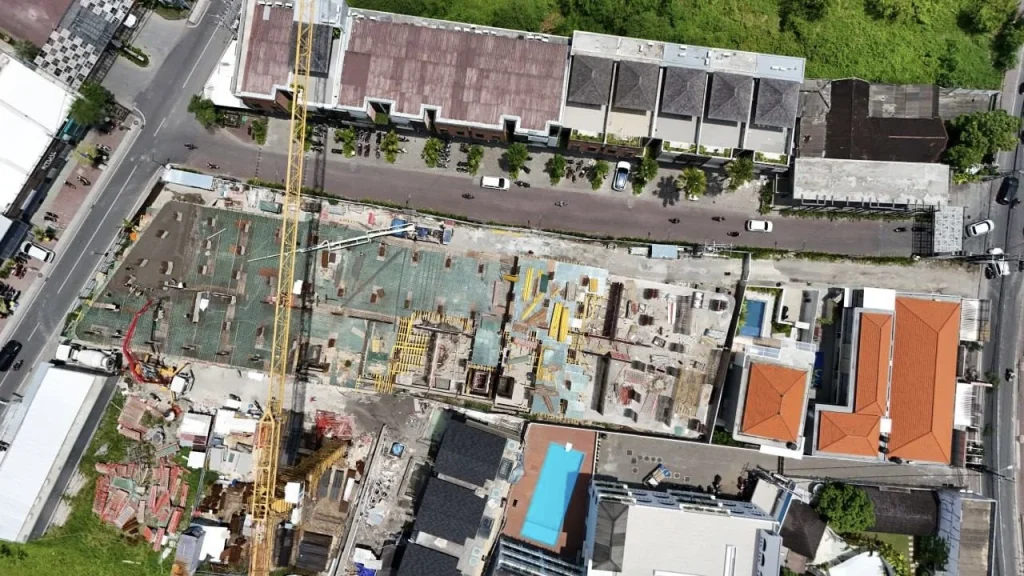
For many investors, buying off-plan property in Bali is a conscious decision to maximize profits. Imagine buying a villa before the concrete has even been poured, with only a contract and some pretty 3D renderings to show for it. Sound risky? Yes, but it's precisely because you share this risk with the developer that the market so generously rewards investors.
What are the main financial benefits?
- Minimum entry point. Prices are always the most favorable at the start of sales. Developers need cash to launch large-scale construction, so the first lots are always sold at a significant discount.
- Powerful capital growth (up to +30%). It's pure math. By the time the workers finish the finishing touches and the developer hands you the keys, your property will have appreciated by 25–30%. You might not even rent out the villa; you could simply resell your unit and lock in the profit right away. Essentially, off-plan in Bali — This is a story about how to make your money work hard even before the first tourist arrives.
- Interest-free installment plan. You don't have to shell out the entire amount right now. The standard market practice is to make a down payment (usually around 30%) and pay the rest in installments as the floors are built. These new developments in Bali are extremely affordable, even for those who prefer to keep their capital from their core business and pay in comfortable installments.
Where are the pitfalls and how to avoid losing money?
The biggest fear of any buyer is a long-term construction project or problems with Indonesian legislation. There are plenty of "wild" construction projects on the island. To avoid turning your investment into a headache, look at the documents, not the pictures in the brochure.
In Indonesia, there are two critical permits you should ask the developer about first. The first is the PBG (official building permit from the authorities). The second is the SLF (certificate of fitness for occupancy). Also, be sure to check the land zoning: villas can only be built in tourist or residential zones (yellow or pink).
And, of course, the developer's reputation is important. Don't be lazy and visit the developer's completed projects. See what they look like a few years after completion. If the developer has nothing to hide, they'll even arrange a tour for you.
Move in and start earning: Ready/Operational properties
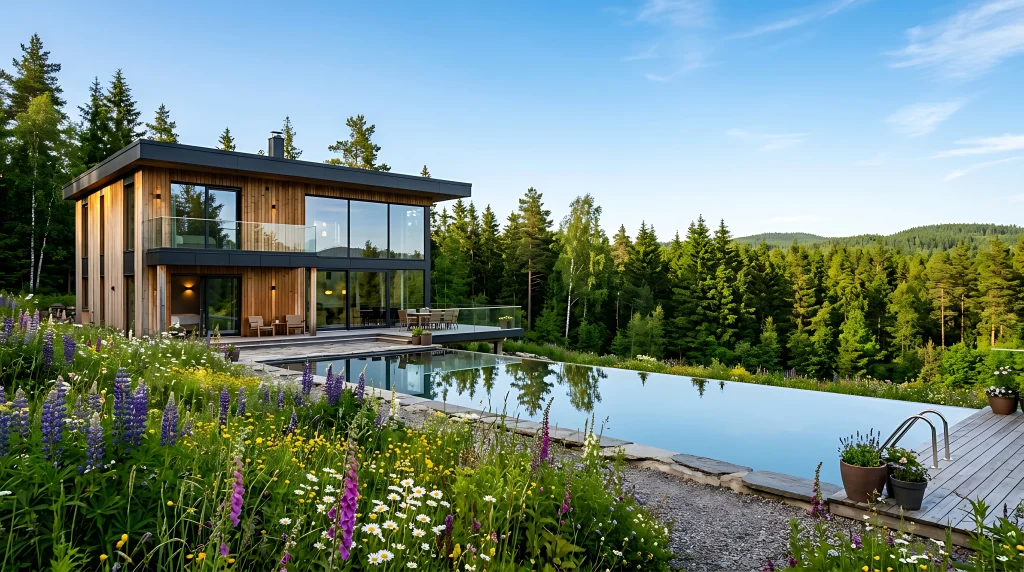
Now let's look at the other side of the coin. Turnkey properties in Bali are the choice of pragmatists, conservative investors, and those who simply don't want or can't wait. You're buying a unit that already has designer furniture, curtains, air conditioning, and a clear pool. These properties are often already rented out to tourists.
Advantages of ready-made objects:
- Money works immediately. You sign the contract, receive the rights to the property, and rental income begins arriving in your account the following month. No more waiting for eighteen months or two.
- «"Product face value.". You can visit the villa in person, touch the materials, evaluate the quality of the finishes, check the water pressure, and listen for road noise outside. No surprises.
- Zero construction risks. The developer won't delay deadlines, construction won't be halted due to problems with cement supplies to the island, and neighbors won't complain about noise. You're buying a fully functioning, well-oiled business machine.
Cons to be aware of:
- High entry threshold. Peace of mind and instant cash flow will come at a price. The developer and the first daring investors have already pocketed the entire construction margin.
- There is no capitalization of construction. Your property will, of course, appreciate in value due to general inflation and improvements in the area's infrastructure. But you won't see the same "plus 30% per year" as at the foundation stage. Your primary source of income is rent.
Land price trends in Bali. Why are even foundations becoming more expensive?
Many new homebuyers often ask a logical question: where does this insane price increase come from while the house is still under construction? Who even guarantees that the property will appreciate in value, since it's just a concrete box?
The answer lies in a fundamental feature of the Bali market—a colossal shortage of good land. Bali isn't made up of just one piece of land. Top-tier locations (Canggu, Seminyak, Bukit, Melasti) are densely populated. Finding a vacant, well-shaped plot with good access is a quest that grows more difficult with each passing month.
Land price dynamics here are impressive. In some popular areas, prices are rising by 15–201₽3₽ annually. So, when you join a project at the start, you lock in the land price for the current moment. While the developer is putting up walls and renovating, the land beneath your unit continues to rapidly appreciate in value.
Even discounting the added value of the building itself, the rising cost of the land inevitably pushes up the price of the entire project. This is why high-quality projects in prime locations simply cannot afford to fall in price by the time they're ready. You're not just investing in concrete; you're investing in scarce land at the world's most popular resort.
Off-plan vs. Ready: Which Should You Choose?
There is no universal answer; it all depends entirely on your goals.
If you have available capital, want to start generating passive income immediately, and want to sleep soundly without worrying about the pace of tiling, the Ready segment is your path. If your primary goal is to grow your capital aggressively, you're willing to wait a year or a year and a half, and you're much more comfortable contributing in increments, then Off-plan is the ideal tool for you.
At ANTA Group, we understand that investments require precise calculations. Submit a request now, and we'll send you detailed financial models for our ANTA Group units under construction and fully completed ones. You'll receive realistic installment schedules and payback calculations so you can compare these investments to your budget and make an informed decision.