
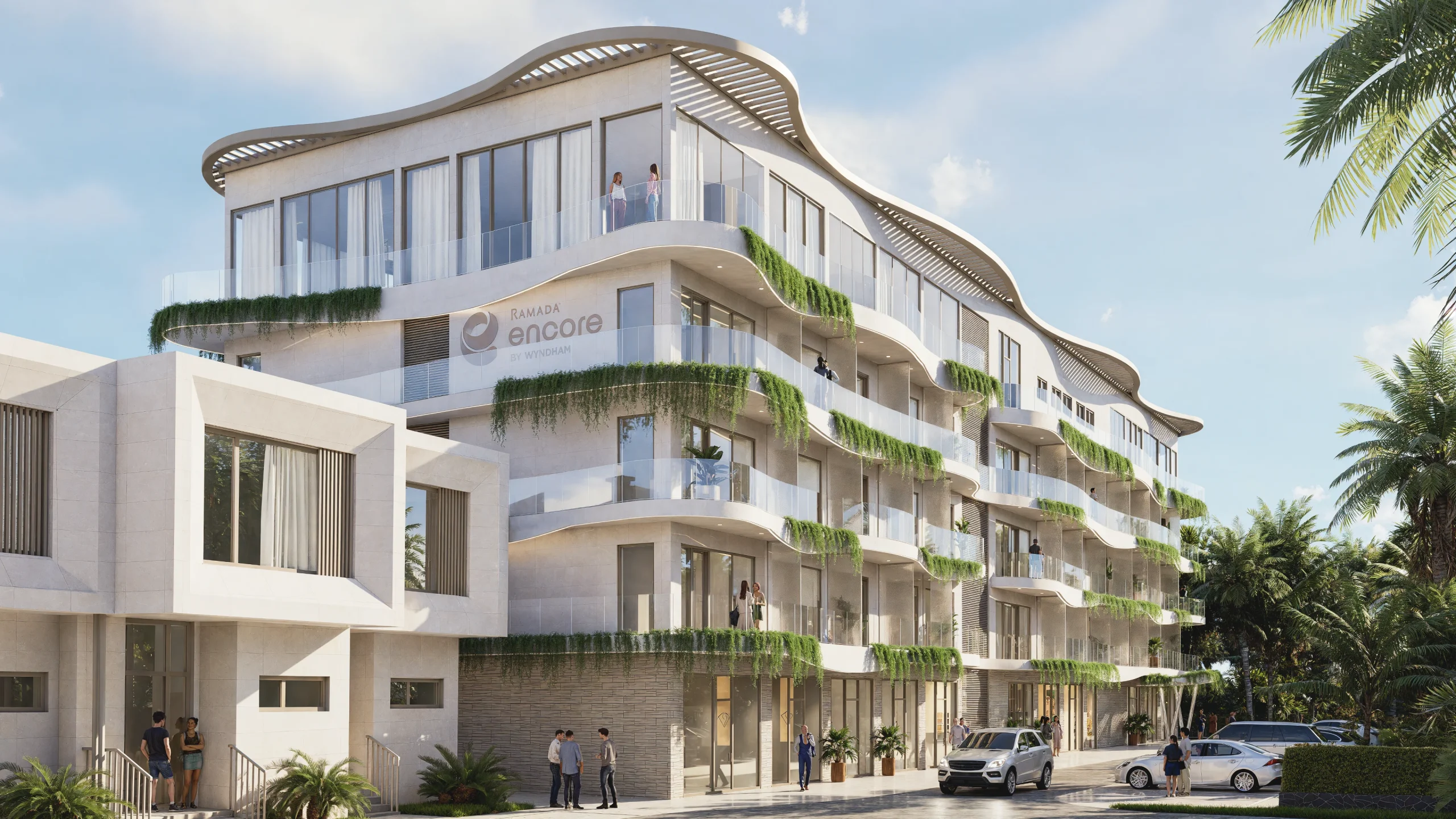
Bali's hotel segment is projected to demonstrate stable occupancy rates, rising ADRs in the premium segment, and increased interest from international investors in branded properties in 2025–2026. The market offers models with regulated owner participation and predictable cash flow, making Bali real estate investments an effective means of capital diversification.
The article also covers current tourist flow figures, a comparison of the hotel model with villas, ROI structure, interest-free installment plan terms, and an investor checklist.
Why does Bali maintain its leadership in terms of tourist flow and occupancy?
By the end of 2025, the number of international arrivals to Bali reached 6.95 million people - a historical maximum and an increase of +10% year-on-year, according to data from the joint report Horwath HTL, Bali Hotels Association, and C9 Hotelworks. The provincial government has set a target of 6.63 million international tourist arrivals by 2026 as part of its strategic plan to 2030. Key markets include Australia (1.63 million arrivals), India, and China, which saw a year-on-year increase of +20%.
Bali Hotel Market Key Indicators 2025 (according to Horwath HTL):
- Average annual occupancy rate: 73.2%;
- Peak occupancy in July was 85.9%;
- Nusa Dua - 79.2% (leader in occupancy);
- Jimbaran and Uluwatu have the highest ADR among districts at IDR 4.8 million (with an islandwide average of IDR 2.4 million);
- Luxury segment - ADR growth +8.0% (IDR);
- Ubud - RevPAR growth +5.6%.
In Q1 2026, the island welcomed 1.46 million international tourists (+1.04% compared to Q1 2025). Peak months are July and August, when demand is driven by the Australian winter and European summer; shoulder season is May, June, September, and October, with RevPAR ranging from IDR 1.6 to 2.0 million.

Hotel Properties vs. Private Villas: A Comparison of Business Models
The profitability of hotel properties in Bali managed by an international operator differs from privately managed villas in terms of revenue structure, distribution, and risk. A hotel brand like Wyndham, Ramada, or Radisson offers a centralized booking system, loyalty programs with millions of users, and more stable RevPAR during the off-season.
Key differences between the models:
- Distribution. The hotel brand operates through a global booking system and corporate contracts. The villa owner relies on Airbnb, Booking.com, and their own marketing.
- ADR and RevPAR. The luxury hotel segment (>$501 per night) demonstrated ADR growth of 8.0% in IDR in 2025. Private villas, not part of a hotel chain, often compete on price.
- Operating expenses. The management company covers staffing, maintenance, repairs, and marketing costs. The villa owner pays for these items separately.
- Risk distribution. In a hotel model, downtime is distributed across a pool of rooms. In a villa model, the risk of downtime falls entirely on the owner.
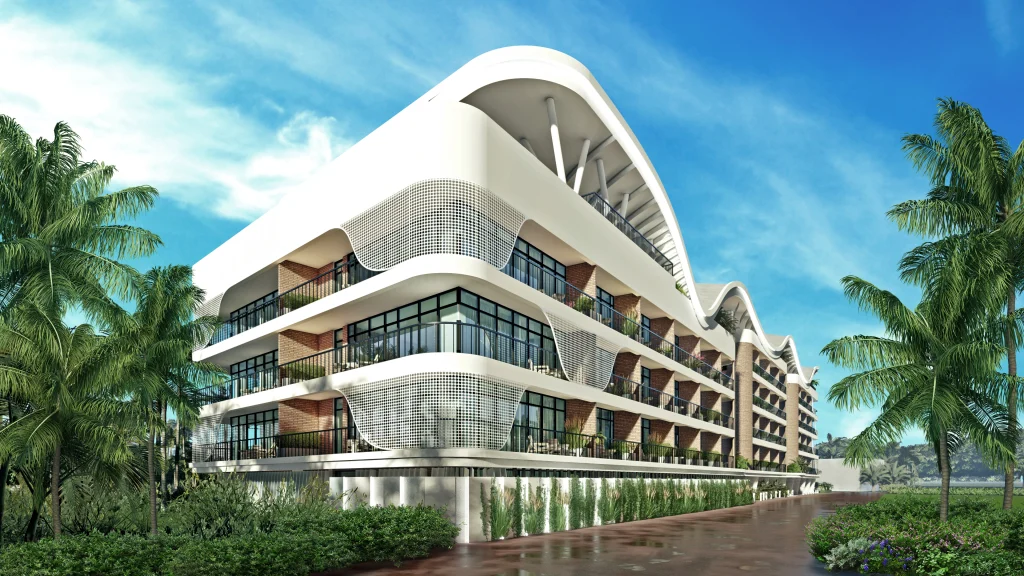
Project Radisson Individuals Anta Canggu Located in Canggu, the area with the highest concentration of solvent tourist traffic and the most active portfolio of new hotel construction projects.
Financial model: what makes up an investor's income?
An investor's income from a hotel unit is made up of two components: rental cash flow and capitalization of the property. The management company transfers net profit to the owner's account after deducting commissions, utilities, and operating expenses. The guaranteed rental yield at the Radisson Individuals Anta Canggu project is 13% per annum.
Financial indicators of a unit costing $144,900 in the Radisson Individuals Anta Canggu project (according to official calculations of ANTA Group):
- Short-term rental: yield 17.7% per annum, payback 5.6 years, net profit $25,595;
- Long-term rental: yield 13.8% per annum, payback 7.2 years, net profit $20,075;
- Price increase after completion of construction: +25% ($36 225);
- Capitalization of the property, taking into account the growth in land value by 9% per year, is a price increase of +18%. ($26 082);
- Total net profit from sale: +43% ($62 307).
These figures are in line with market benchmarks. Industry analysts estimate the average return on hotel assets in Bali in 2026 to be in the range of 8–151% per annum, with a premium for branded properties in top locations. Passive income in Bali, through a managed hotel property, does not require the owner's presence on the island.
Purchase terms: down payment and interest-free installment plan
Bali developer ANTA Group offers two payment options: 100% for a discounted purchase or an interest-free installment plan with a minimum down payment. Payments are made in dollars or euros to a company account registered in Indonesia. The project's legal basis is a 51-year land lease agreement (26 years with a guaranteed 25-year extension) with PT Anta Group Development.
Basic conditions for participation in ANTA Group projects:
- Unit reservation agreement - advance payment from $10,000;
- Initial payment - from 10% of the unit cost;
- Interest-free installment plan – up to 3–4 years, final payment until 2029;
- Remote registration of documents without physical presence on the island;
- Full legal and financial support for the transaction.
Starting prices for units in the developer's portfolio: from $105,000 in the project Noah on Sumba Island, from $138 500 in Ramada Encore by Wyndham Bali Anta And from $178,000 at the Radisson Individuals Anta Canggu. Investors can purchase apartments in Bali with installments in the hotel unit format with a starting budget of $10,500 for the Noah project.
Investor's checklist
The Bali hotel real estate market in 2026 combines stable tourist flow, ADR growth in the premium segment, and manageable risks thanks to professional operator networks. For investors with a budget of $1,000 to $1,000,000, the model provides predictable cash flow and capitalization during the construction phase without the need for personal operational involvement. Investing in Bali real estate managed by an international hotel operator remains one of the most accessible tools for generating passive income in dollars.
Investor's checklist for evaluating a property in Bali:
- Location. Priority: Canggu, Uluwatu, Jimbaran, Nusa Dua with confirmed occupancy of 70%+.
- Operator. The presence of an international brand with a global booking system (Radisson, Wyndham, Ramada, Hyatt).
- Legal model. A transparent land lease agreement, developer status, and a full package of construction permits.
- Financial model. ROI calculation for two scenarios (short-term and long-term lease), RevPAR forecast for the area, capitalization plan.
- Payment terms. Interest-free installment plan, down payment amount, payment schedule until completion of construction.
- Project stage. The price increase from the start of sales to the opening is typically 20-30%; early entry into the project increases the overall capitalization.
The developer's affiliate program is available on the official website. ANTA Group — It is aimed at brokers, consultants, and private representatives who accompany investors during the unit selection stage.
Request a unit payback financial model from ANTA Group—a customized ROI calculation based on your selected project, unit category, leasing strategy (short- or long-term), and payment schedule.
Get a ready-made financial model for calculating profitability from ANTA Group →