
Author: Anton Taranenko, co-founder and CEO of ANTA Group
The return on a room in an aparthotel is calculated using a single process: occupancy is multiplied by the average nightly rate, the operator's share and management expenses are subtracted from the revenue, then taxes and service charges, and the remainder is divided by the room price. Everything else you see in the presentations are assumptions within this process. At ANTA Group, we are building an aparthotel in Bali under the Radisson Individuals brand, and in this article, we show the full calculation, step by step, using a sample room from our project in Canggu.
What makes up the income for a room in an aparthotel?
It consists of four layers, each one smaller than the previous one.
- Room Revenue. Occupancy (the share of occupied nights per year) is multiplied by the average nightly rate (ADR). In hotel reporting, this product is called RevPAR, or revenue per available room.
- Operator's share and management expenses. Revenue is reduced by brand and management company fees, staff salaries, utilities, booking platform commissions, and marketing.
- Owner's taxes and fees. Rental income tax, insurance, furniture and equipment upgrade reserve, and contract service fees.
- The owner's net income. This is what comes into the account. This amount is divided by the room purchase price to obtain the annual yield.
It is impossible to check one percent without these layers, so each layer is analyzed separately below.
What occupancy and nightly price should be included in the calculation?
Not your dream, but the market. According to the "Bali Hotel & Branded Residences 2026" report by Horwath HTL, Bali Hotels Association, and C9 Hotelworks (March 2026), the average hotel occupancy rate in Bali for 2025 was 73.2%, peaking in July at 85.9%, the average nightly rate was IDR 2.4 million, and revenue per available room was IDR 1.7 million. International arrivals for 2025 were 6.95 million, an increase of 10.% compared to 2024. Nusa Dua showed the highest occupancy rate among districts, 79.2%, while Jimbaran and Uluwatu had the highest nightly rate, 4.8 million IDR.
At the exchange rate as of September 21, 2026 (17,790 IDR per dollar), the average nightly rate on the island is approximately $135, with revenue per room approximately $96 per night. This is the average for all hotel classes, from two-star to luxury; a specific property deviates in both directions depending on the area, brand class, year of opening, and season.
For this example, we're using below-market assumptions: 65% occupancy and a nightly rate of $125. A new property rarely reaches market average occupancy immediately in its first year of operation, and the calculations must account for this.
What does the calculation for a conditional number in Canggu look like?
A room in the Radisson Individuals Anta Canggu project, price from $178,000 (from the project page, September 2026). Opening Q1 2027. Radisson Individuals (Radisson Hotel Group) brand, managed by Ribas Hotels Group. All percentages below, except for the tax rate, are assumptions for example purposes only, not contractual terms.
Calculation example (assumptions are indicated)
| Step | Assumption | Amount per year |
|---|---|---|
| Busy nights | 65% of 365 occupancy | 237 |
| Revenue of the issue | 237 nights x $125 | 29 625 $ |
| Operator's share and management expenses | 45% of revenue | 13 331 $ |
| Owner's income before taxes | 55% of revenue | 16 294 $ |
| Tax on rental income | 10% of the owner's income | 1 629 $ |
| Reserve for furniture and equipment | 3% of revenue | 889 $ |
| Number insurance | fixed | 400 $ |
| Owner's net income | 13 376 $ | |
| Profit to price: $178,000 | 7,5% |
The 10% rate is taken from the PwC Tax Summaries for Indonesia (updated June 11, 2026): final tax on income from land and building leases. For a non-resident without an applicable double taxation treaty, the basic rate under Article 26 is 20%, and this is a separate line item that should be clarified for your status before the transaction.
The same number with different input data:
| Occupancy and nightly price | Net income | Profitability |
|---|---|---|
| 55% and $110 (weak year) | 9 881 $ | 5,6% |
| 65% and $125 (basic example) | 13 376 $ | 7,5% |
| 73% and $135 (2025 market level) | 16 298 $ | 9,2% |
The difference between a weak year and a market-standard year is almost double, and this is with an unchanged operator share. That's why the yield figure without specified occupancy and nightly rate is meaningless. On the project page, we provide a benchmark of up to 9.1% per annum: this is the company's estimated benchmark for occupancy and nightly rate close to 2025 market values, not a promise. Actual yield will depend on the year, season, and operator performance.
How does a branded aparthotel differ from a self-catering villa?
The mechanics of income, not just the amount.
- Looking for a guest? At an aparthotel, a room is sold through the brand's booking system and loyalty program. A self-rented villa operates through booking platforms and the owner or hired manager's own efforts.
- How revenue is calculated. The hotel operates a pool: revenue from all rooms in a given category is divided proportionally among the owners, and any downtime for a specific room is spread across the pool. A villa only earns revenue when it's occupied.
- Who bears the costs? At a hotel, staff, cleaning, reception, marketing, and maintenance are included in the property's operating expenses. At a villa, each of these costs is covered by a separate contract and a separate owner's invoice.
- What about depreciation? Hotel standards require a reserve for furniture and equipment upgrades, usually a percentage of revenue. Villas often don't include this reserve, and after five years, repairs eat up the income of two seasons.
- How much time does the owner spend? An aparthotel requires zero maintenance: reports and payments. A self-rented villa is an operating business with guests, staff, and repairs.
We discussed in more detail why brand influences occupancy in the article "Why a developer needs an international hotel brand."
What is an operator agreement and revenue split?
The contract with the operator specifies who manages the number, how revenue is divided, and what the owner receives.
- Pool and distribution. The room is assigned to a hotel pool. Revenue is calculated based on the pool and distributed among the owners according to the contractual rules: by room category, by area, or equally.
- Revenue split. The proportion in which revenue (or income after operating expenses) is divided between the owner and operator. It's important to understand the basis for calculating the share: gross revenue or what's left after personnel and utility expenses. The same figure of 55% yields different income with different bases.
- Brand commission. A separate line item for the use of the brand name, standards, and booking system. This may be included in the operator's share or added to the fee.
- Payment frequency and report. Monthly or quarterly, with a report on occupancy, average nightly rate, and expenses. Without the report, you won't be able to verify any of the lines in the table above.
- Right of occupancy. How many nights per year can an owner occupy their room, and how does this affect their share of the revenue for the period?
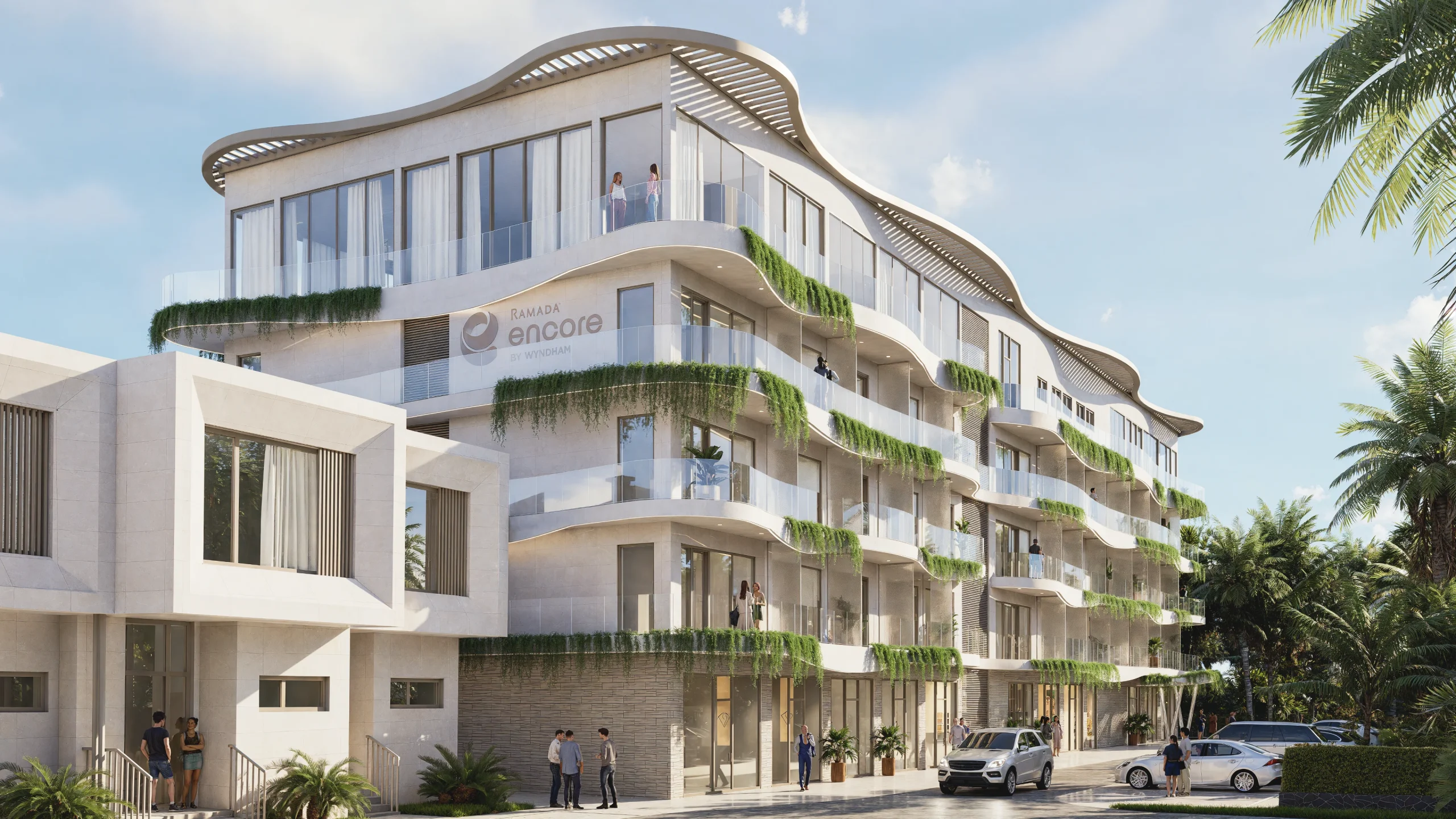
In our projects, the rooms operate under international brands: in Canggu, it's Radisson Individuals, managed by Ribas Hotels Group, and in Pandawa Hills, it's Ramada Encore by Wyndham Bali Anta, managed by Wyndham. We present the terms of the contract with the operator to the buyer before the transaction, along with the room's financial model.
What expenses are often forgotten to be included in the calculation?
Four lines that cause the calculated yield to differ from the actual yield.
- Furniture and equipment. Branded rooms are rented fully furnished according to the operator's standard. Please confirm whether the room price includes the furniture and what reserve is deducted from the proceeds for upgrades.
- Insurance. Property insurance and guest liability insurance. In our projects, property insurance is covered by the management company, but keep a separate line item in your quote to see exactly what's insured.
- Service fee. Costs for common areas, the pool, security, and building utilities. Some are included in the pool's operating expenses, while others are billed separately to the owner.
- Rental income tax for non-residents. The final rental tax in Indonesia is 10%, but non-residents may be subject to a 20% rate under Article 26 if there is no agreement between the countries or one has not been applied. The difference between 10% and 20% in our example is $1,600 per year.
A separate entry line: transaction processing and fund transfer costs. These don't affect the annual return, but they do increase the investment amount.
How does a 0% installment plan change the yield calculation?
The installment plan does not change the room's income, but the amount and schedule of your investments.
Facts from the Canggu project page: interest-free installments for up to 18 months with a 30% down payment, or 100% payment with a special discount offer. Reservations are confirmed by a contract with a $1,000 advance payment. After the initial 30% payment, the buyer chooses a payment schedule. Payment can be made by bank transfer to the company account in euros or dollars, or in cash at the office.
What does this mean for numbers:
- Return on invested capital during the construction period. While the project is under construction, there is no income. With installment plans, capital is invested in installments rather than all at once, and the entire project isn't held in construction until the opening in Q1 2027.
- Calculation basis. We calculate annual yield based on the full room purchase price, as in the table. When a discount is granted for full upfront payment, the calculation basis is smaller, and the same net income yields a higher percentage.
- Interest-free installment plans. There are no overpayments, so the final price with installment plans is equal to the price on the page, and the return on investment is not reduced by financing costs.
On our Bali Hotel Property Investment page, we've outlined a checklist of documents you should request before making your first payment.
How to check the developer's estimate before purchasing?
Ask not for the total percentage, but for a table with eight rows, as above, and check each row against external data.
- Occupancy and nightly rate: Compare with Horwath HTL and C9 Hotelworks' report for last year and with the property's location.
- Operator's share: find it in the draft contract, not in the presentation.
- Taxes: Check the rate for your residency status.
- Equipment, insurance, service fee: three separate questions, three written answers.
- Selling: developer or broker. We sell directly, without agency fees. The legal entity in Indonesia is PT Anta Group Development, with a 51-year land lease (26 years with a 25-year extension). How to check this in ten minutes is described on the company verification page.
Real estate in Bali is purchased for many years, and the calculation should survive a weak year, not just a good one. If a developer's model only holds up at the top of the chart, that's cause for concern.
Frequently asked questions
What is the average hotel occupancy rate in Bali? According to a 2025 report by Horwath HTL, the Bali Hotels Association, and C9 Hotelworks, the average occupancy rate on the island was 73.2%, and 85.9% in July. This is an average for all hotel classes; individual properties may show higher or lower occupancy rates.
Is the return calculated based on the room price or the amount invested? The standard calculation is based on the full room price. If you paid 100% with a discount, the return on the actual amount invested will be higher than the table shows.
What is RevPAR and why is it calculated? It's revenue per available room: occupancy multiplied by the average nightly rate. This is the first line of any fair calculation; it's used to compare properties in different areas and classes.
How much does the operator receive? It depends on the contract: a share of revenue or a percentage of income after operating expenses, plus a brand commission. In our example, the operator's share, including operating expenses, is taken as 45% of revenue. This is an assumption for clarity, not a contractual requirement.
Do non-residents pay tax on rental income in Indonesia? Yes. The final tax on rental income from land and buildings is 10%. For non-residents without an applicable agreement, the basic rate under Article 26 is 20%. The applicable rate for your status should be clarified before the transaction.
If you need a similar table for a specific room and payment schedule, open the Radisson Individuals Anta Canggu project page and request a quote: developer ANTA Group will show you a model with the same eight lines and indicate which are assumptions and which are contractual conditions.
Projects and purchase terms are collected on our Bali property directly from the developer page.